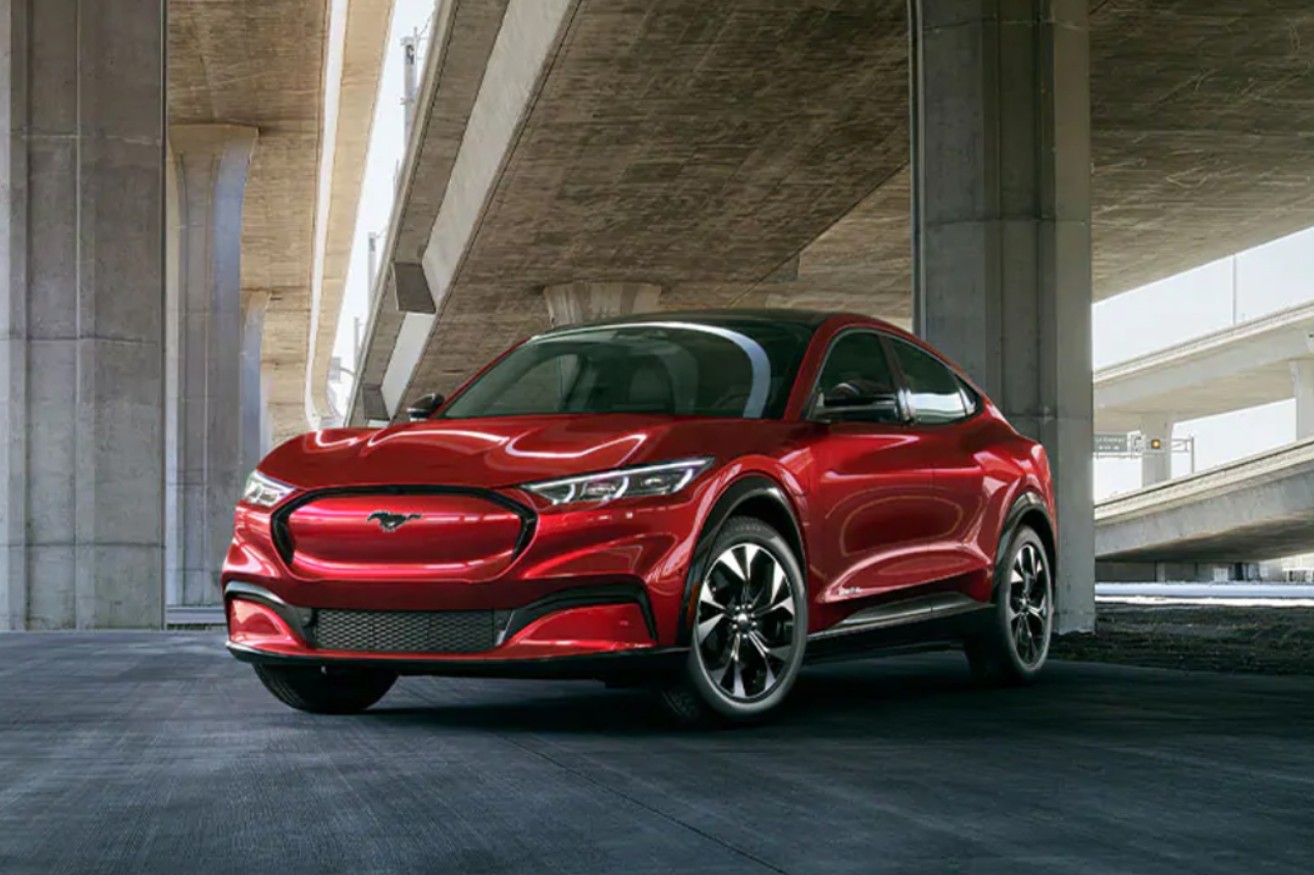
2028 Ford Mustang Mach-E Redesign, Specs, Interior – The 2028 Ford Mustang Mach-E could become one of the most interesting chapters in Ford’s electric-vehicle strategy, but there is an important distinction between what is known today and what remains speculative. Ford has not officially announced a production-ready 2028 Mustang Mach-E, its final specifications, or an official release date. The current 2026 Mach-E remains an important part of Ford’s U.S. electric lineup, starting at $37,795 and offering as much as 320 miles of EPA-estimated range depending on configuration. Ford also continues to position the Mach-E around Mustang-inspired styling, strong acceleration, everyday practicality, and a technology-focused cabin.
That uncertainty makes a potential 2028 model particularly intriguing. Rather than assuming that Ford will simply place a larger battery and a new bumper on the existing vehicle, the next Mach-E could receive a more comprehensive efficiency-focused update. The present vehicle already combines a crossover body with aggressive Mustang design cues, but the electric market is moving quickly toward better energy density, faster charging, lighter construction, improved software, and more sophisticated driver assistance. A future Mach-E therefore needs to improve the ownership experience rather than merely increase horsepower. Range, charging time, thermal management, cabin technology, road manners, and long-distance usability could become equally important selling points.
Ford’s current electric strategy also makes the Mach-E’s future less predictable. The company has confirmed that its upcoming Universal Electric Vehicle platform will not be used for the Mustang Mach-E. Ford has specifically explained that the new platform is being developed around extreme efficiency, weight reduction, aerodynamics, and lower-cost batteries, while the Mach-E will not migrate to that architecture. That does not automatically mean the Mach-E will disappear, nor does it confirm a 2028 replacement. Instead, it suggests that any future Mach-E could follow a different engineering path, potentially using a substantially evolved version of its existing architecture or another dedicated solution.
If Ford does proceed with a 2028 Mustang Mach-E, the product needs to preserve the qualities that made the name recognizable while addressing the weaknesses of an aging EV design. The ideal formula would be straightforward: a sharper exterior, more premium interior, improved battery efficiency, quicker charging, stronger software, competitive real-world range, and performance that remains unmistakably Mustang-inspired. The objective would not necessarily be to create the most powerful electric SUV on the road. A lighter, more efficient and better-balanced Mach-E could be considerably more compelling than one that simply adds hundreds of pounds of battery capacity. 2028 Ford Mustang Mach-E Redesign
2028 Ford Mustang Mach-E Redesign and Update Plan
Exterior & Interior
The exterior of the 2028 Ford Mustang Mach-E should remain immediately recognizable, because the crossover’s identity depends heavily on its Mustang-inspired proportions. The current model already uses a long hood visual treatment, swept roofline, muscular rear quarters, distinctive lighting, and the Mustang pony emblem to separate it from conventional electric crossovers. A future version could refine those elements rather than abandon them. Expect sharper lighting signatures, a more sculpted front fascia, improved active aerodynamic elements, redesigned wheels, and a cleaner interpretation of the familiar Mustang grille-inspired nose. The biggest visual change could actually come from aerodynamic optimization, allowing Ford to reduce drag without making the vehicle look excessively futuristic.
Aerodynamics will likely become increasingly important for the 2028 Mach-E. The current vehicle can reach up to 320 EPA-estimated miles in Premium RWD extended-range form, while other configurations sacrifice range for traction or performance. A future model could use more aggressive active grille shutters, optimized underbody panels, wheel designs that reduce turbulence, a revised roof spoiler, and tighter integration between the rear bodywork and lighting. These changes would have a practical purpose: reducing the amount of energy required to move the vehicle through air at highway speeds. For an electric SUV, aerodynamic efficiency can improve range without requiring an enormous battery.
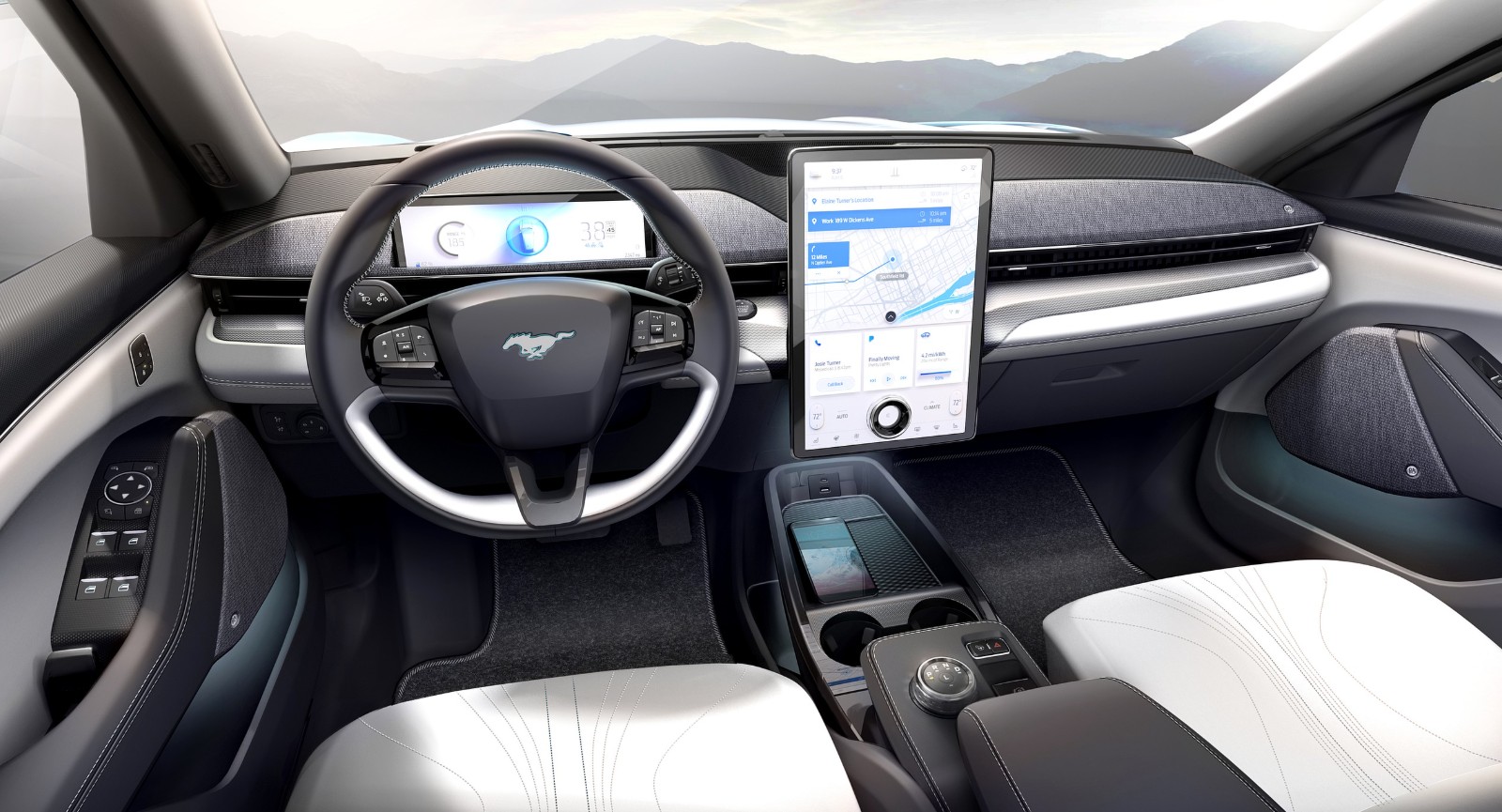
The interior could receive an equally important transformation. The current Mach-E already features a 15.5-inch center display and a 10.2-inch driver information display, along with wireless Apple CarPlay and Android Auto compatibility. A 2028 version could take that technology further with faster processing, a cleaner user interface, improved voice recognition, more natural navigation, and expanded over-the-air software capabilities. Ford could also improve the physical ergonomics surrounding the touchscreen, adding better shortcut controls and reducing the need to navigate multiple menus while driving. Premium versions should receive softer materials, more sophisticated ambient lighting, improved acoustic insulation, and upgraded seating.
Space and practicality should remain central to the Mach-E’s appeal. The current model seats five people and provides 29.7 cubic feet of cargo room behind the rear seats, with approximately 59.7 cubic feet behind the first row on the Select configuration. It also has a 2.6-cubic-foot front trunk. A redesign could improve packaging rather than dramatically increasing exterior dimensions. Better battery integration, slimmer seating structures, and revised storage solutions could create more useful passenger and cargo space. A larger or better-organized frunk would also make the Mach-E more competitive with newer electric crossovers designed around EV-specific packaging from the beginning.
2028 Ford Mustang Mach-E Specs
Engine & Performance
Powertrain development will probably define whether the 2028 Mustang Mach-E feels like a genuine next step or simply another facelift. The current lineup already offers a wide range of personalities. The Select and Premium can be ordered with rear-wheel drive or electric all-wheel drive, while the GT and Rally emphasize performance. Current Ford specifications show up to 370 horsepower and 500 lb-ft of torque for an extended-range eAWD Premium configuration, while the GT uses a more powerful setup and the Rally adds specialized suspension and performance hardware. A future Mach-E could preserve this multi-character approach while making every version more efficient.
For the 2028 model, a reasonable projection would place the mainstream rear-wheel-drive Mach-E somewhere around 300 horsepower, with dual-motor all-wheel-drive models potentially producing 400 horsepower or more. A GT could remain above 450 horsepower, while a future high-performance package could potentially push beyond 500 horsepower. These numbers are projections rather than Ford-confirmed specifications. More important than peak output, however, will be how effectively the motors deliver power without draining the battery excessively. Better inverter technology, improved thermal control, optimized motor efficiency, and more sophisticated traction management could make a 2028 Mach-E feel quicker without requiring an oversized battery.
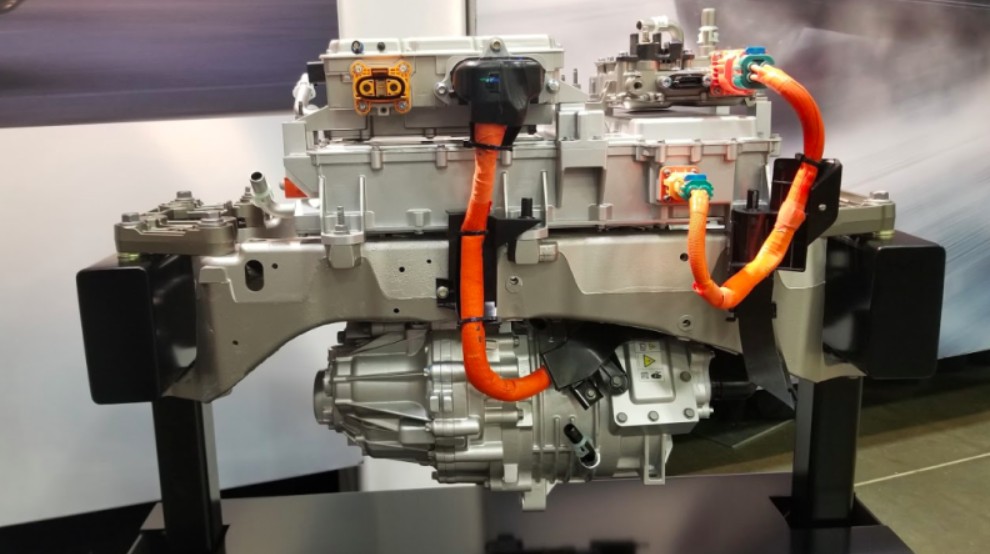
The performance-focused Mach-E Rally provides an especially useful foundation for the future. The current Rally uses eAWD, rallycross-tuned MagneRide damping, Michelin CrossClimate2 tires, and the GT Performance Upgrade with up to 700 lb-ft of torque. Its EPA-estimated range is 255 miles, illustrating the familiar compromise between extreme performance hardware and long-distance efficiency. A 2028 performance version could improve that balance through lighter wheels, improved regenerative braking, smarter torque distribution, and a more efficient battery rather than simply installing larger motors.
Charging performance is another area where the next Mach-E needs meaningful improvement. Current Mach-E configurations support up to 150 kW DC charging, while the vehicle uses an 11-kW AC onboard charger. A 2028 version could reasonably target a significantly higher peak charging rate and a more consistent charging curve, potentially reaching the 200-kW-plus range if Ford determines that its battery and thermal system can sustain it. A better charging curve may ultimately matter more than a headline peak number. For long-distance drivers, the difference between adding a substantial amount of range in 20 minutes versus spending considerably longer at a charger can change the entire perception of EV ownership.
2028 Ford Mustang Mach-E Fuel Economy
Range is likely to remain one of the most searched specifications for the 2028 Ford Mustang Mach-E. The current vehicle already reaches 320 EPA-estimated miles in its longest-range Premium RWD configuration, while Select RWD reaches 300 miles with the extended-range battery and GT reaches 280 miles. The Rally sits at 255 miles because of its performance-oriented setup. For 2028, Ford could target roughly 330 to 380 miles for the most efficient versions. Such a gain would not necessarily require an enormous battery. Improved aerodynamics, lower rolling resistance, reduced weight and more efficient motors could provide meaningful improvements while controlling vehicle mass.
Fuel economy for an electric vehicle is better discussed in terms of MPGe and energy consumption rather than traditional miles per gallon. The exact 2028 EPA ratings cannot be known until Ford submits the vehicle for certification. Still, the direction is clear: the most efficient Mach-E should prioritize low energy consumption over maximum acceleration. A future long-range RWD version could potentially become the efficiency leader of the lineup, while GT and Rally versions would naturally consume more electricity because of larger motors, wider tires and performance-focused chassis tuning. Owners should also expect winter temperatures, highway speeds, wheel sizes and climate-control use to have significant effects on real-world range. 2028 Ford Mustang Mach-E Redesign
2028 Ford Mustang Mach-E Safety Features
Safety technology should receive substantial attention because electric vehicles are increasingly competing on software as much as mechanical hardware. The current Mach-E includes a broad collection of electronic safety and driver-assistance systems, while Ford offers BlueCruise for the model. Ford’s current BlueCruise system can provide hands-free highway driving on compatible roads, and newer versions can include Automatic Lane Change. A 2028 Mach-E could build upon that foundation with improved camera processing, better object recognition, enhanced lane-change behavior, more capable intersection assistance and faster responses to changing traffic conditions.
A likely 2028 safety package would continue to include automatic emergency braking, pedestrian detection, blind-spot monitoring, rear cross-traffic assistance, lane-keeping technology, adaptive cruise control, forward collision warning and parking assistance. The more interesting development could be how these individual systems work together. A modern electric vehicle can continuously update software, allowing Ford to improve certain functions after the vehicle has left the factory. BlueCruise is particularly important here because Ford already treats the technology as an evolving service rather than a single static feature. For the next Mach-E, a smoother and more predictable hands-free driving experience could become as valuable to buyers as horsepower.
2028 Ford Mustang Mach-E Release Date & Price
The release date remains the biggest unanswered question. Ford has not announced an official 2028 Mustang Mach-E launch schedule, and the company’s confirmation that the Universal EV platform will not be used for Mach-E makes the vehicle’s long-term product plan particularly difficult to predict. If Ford decides to continue the nameplate with a substantial update, a late-2027 reveal followed by 2028-model-year availability would be one plausible scenario. Another possibility is that Ford continues the existing Mach-E with incremental changes rather than launching a completely new generation. Until Ford announces a product program, neither timeline should be treated as confirmed.
For buyers watching the 2028 Mustang Mach-E, the most meaningful improvements would therefore be more than cosmetic. The ideal next model would combine Mustang character with EV efficiency, a genuinely useful long-range battery, faster charging, a quieter cabin, smarter software and a more refined chassis. The current Mach-E has already established that an electric crossover can carry the Mustang name without abandoning performance, and Ford’s next decision will determine how relevant that formula remains as the electric market matures. If the company can deliver meaningful efficiency and charging improvements while keeping the design emotionally distinctive, the 2028 Mach-E could remain one of Ford’s most recognizable electric products.
The trim strategy for a future Mach-E will probably continue to divide the range into distinct personalities. The current 2026 lineup consists of Select, Premium, GT and Rally, with Ford listing starting prices of $37,795, $40,595, $53,395 and $57,690 respectively on its current model information. Ford’s build-and-price system can show different pricing depending on configuration and market presentation, so those figures should be treated as current reference points rather than future 2028 pricing. A 2028 lineup could retain similar names because customers already understand the hierarchy, although Ford could introduce a new performance or special-edition model.
The most realistic 2028 pricing projection would put the entry Mustang Mach-E around $40,000 to $45,000 before destination and options. A Select-equivalent model could focus on affordability, while Premium versions could occupy approximately $45,000 to $50,000. A GT could move into the $55,000 to $65,000 territory, and a more specialized Rally or performance flagship could approach $65,000 to $75,000. These figures are estimates, not Ford-announced MSRP figures. Battery costs, tariffs, production strategy, incentives, equipment levels and market conditions could all influence the final price substantially by the time a 2028 vehicle reaches dealerships. 2028 Ford Mustang Mach-E Redesign
Conclusion
The 2028 Ford Mustang Mach-E currently exists more as a future possibility than a fully confirmed production vehicle. Ford has not released official specifications, pricing, trim levels or a launch date for a 2028 model, so projected figures should not be confused with factory information. What is clear is that the existing Mach-E still occupies an unusual position in Ford’s lineup: it combines the practicality of a five-seat crossover with Mustang-inspired styling and genuinely strong electric performance. The current model already offers up to 320 miles of EPA-estimated range, a 3.3-second 0–60-mph capability in its quickest configuration, and a broad selection of performance and comfort equipment.
A successful future model should concentrate on efficiency rather than chasing specifications for their own sake. More range, quicker charging and better energy management would have a larger effect on daily ownership than another incremental horsepower increase. At the same time, the Mustang identity needs to remain visible in the exterior design, steering response, acceleration character and available performance variants. A Mach-E that becomes efficient but loses its personality would miss an important part of the reason the nameplate exists.
The biggest opportunity may be creating a better balance between performance and practicality. A long-range Premium could serve commuters and road-trip drivers, while GT and Rally versions could provide the aggressive character expected from a Mustang-branded vehicle. Improved battery cooling, torque management, suspension calibration, software and charging behavior could make each version more distinct without forcing Ford into an unnecessarily complicated lineup.
Until Ford provides official confirmation, the 2028 Mustang Mach-E should be viewed as a developing story rather than a vehicle with finalized specifications. The current model gives us a strong indication of Ford’s foundation, while the company’s changing EV strategy leaves plenty of room for the eventual product to evolve. If Ford chooses to keep the Mach-E name alive and gives it the range, charging speed, technology and driving refinement expected from a late-decade EV, the 2028 model could become a much more sophisticated interpretation of the electric Mustang SUV.